

Signs of Spiritual Abuse in Churches
Spiritual abuse occurs when religious authority is used to control, manipulate, or shame people into compliance. Leaders may claim to speak directly for God, discourage questioning, and use fear of divine punishment to enforce obedience. For children, spiritual abuse is particularly damaging because they lack the ability to distinguish between healthy spiritual guidance and coercive control.
Many people who grew up in strict religious environments search for the term "spiritual abuse" when trying to understand whether their experience crossed the line from normal religious teaching into something harmful. Recognizing spiritual abuse is often the first step toward understanding the broader patterns of control that existed in their community.
| Healthy spiritual leadership | Spiritual abuse |
|---|---|
| Encourages personal growth and independent thinking | Demands conformity and punishes questioning |
| Acknowledges fallibility of leaders | Claims special divine authority that cannot be challenged |
| Welcomes questions and honest doubt | Frames doubt as sin or spiritual weakness |
| Respects personal boundaries and autonomy | Controls personal decisions, relationships, and information |
| Uses scripture to encourage and support | Weaponizes scripture to shame, silence, or manipulate |

Religious Trauma Symptoms
Religious trauma refers to the emotional and psychological harm caused by experiences within strict, fear-based, or controlling religious environments. It is not about religion itself but about specific practices — fear of eternal punishment, shame-based teaching, emotional manipulation, and rigid authority structures — that cause lasting damage to mental health and identity.
People who experience religious trauma often struggle with chronic anxiety, guilt, difficulty trusting others, and a deep sense that something is fundamentally wrong with them. These effects can persist long after leaving the religious environment.
| Aspect | Description |
|---|---|
| What it is | Emotional and psychological harm from toxic religious experiences — not from faith itself |
| Common signs | Chronic guilt, anxiety, fear of punishment, difficulty making decisions, emotional numbness |
| Long-term effects | Depression, PTSD-like symptoms, identity confusion, relationship difficulties, loss of trust |
| How guilt and shame operate | Used as control mechanisms — members are taught to feel guilt for normal human experiences and shame for questioning authority |

Recovery After Spiritual Abuse
Recovery from a high-control religious environment is not a single event but a gradual process of rebuilding. It involves overcoming deeply embedded guilt and fear, developing the ability to think independently, forming a new sense of identity, and learning to trust yourself and others again.
Many people describe recovery as learning to live without a script for the first time. Decisions that others take for granted — what to believe, what to eat, how to spend weekends, who to trust — can feel overwhelming when you've spent years having those choices made for you.
| Recovery area | What it involves | What helps |
|---|---|---|
| Overcoming guilt and fear | Recognizing that guilt was a control mechanism, not evidence of wrongdoing | Therapy, journaling, connecting with others who've had similar experiences |
| Independent thinking | Learning to evaluate ideas without defaulting to an authority figure | Reading widely, asking questions, tolerating uncertainty |
| Rebuilding identity | Discovering who you are apart from the group's definition of you | Exploring interests, values, and relationships on your own terms |
| Moving beyond fear-based belief | Separating spiritual exploration from the fear and control of the past | Allowing yourself to hold beliefs loosely; embracing not knowing |

Psychology of Belief: Why People Stay in Controlling Churches
Understanding why people are drawn to high-certainty belief systems — and why leaving feels so difficult — is not about blaming individuals. It is about recognizing well-documented psychological patterns that affect all human beings. These patterns explain how groups gain and maintain influence, and why former members often struggle with guilt for having believed.
The Psychology of Certainty
Why High-Certainty Groups Are Attractive
| What the group offers | How it feels to members | Psychological mechanism |
|---|---|---|
| Clear, simple answers | "Finally, someone who makes sense" | Reduces cognitive dissonance and uncertainty |
| Prophecy and prediction | "We know what's coming" | Sense of control over an unpredictable world |
| Strong moral rules | "I know exactly what's right and wrong" | Eliminates moral ambiguity |
| Insider knowledge | "We see what others can't" | Provides identity, purpose, and a sense of superiority |
| Tight-knit community | "These are my people" | Belonging and social reinforcement |
| Strong defense of beliefs | "I can't be wrong about this" | Cognitive dissonance makes changing beliefs feel threatening to identity |
Leaving a Controlling Church: What to Expect
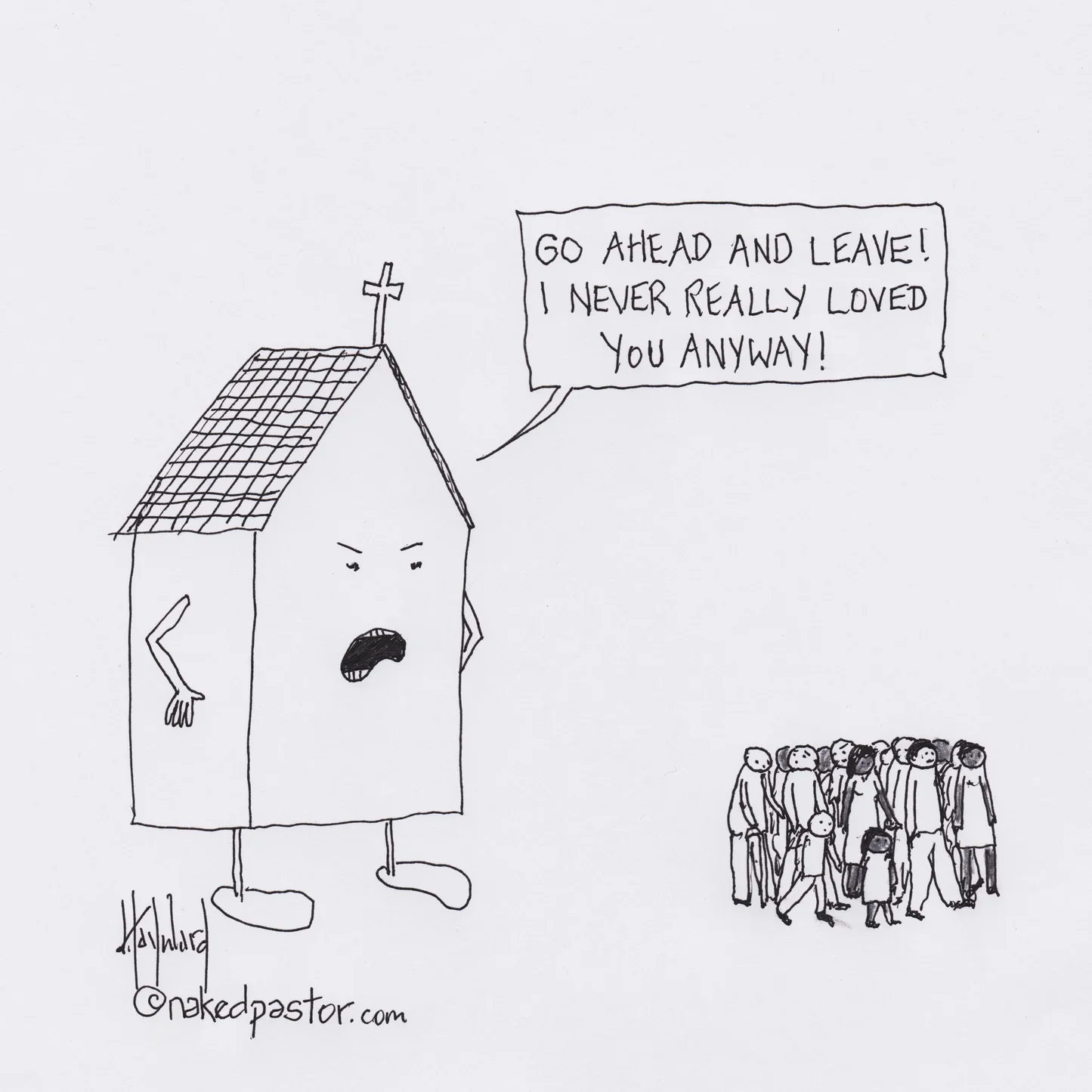
Leaving a high-control religious group is one of the most difficult transitions a person can experience. It involves far more than changing beliefs — it means losing community, identity, social support, and often family relationships. Many former members describe the process as grieving a death, because the life they knew and the person they were within the group no longer exists.
The emotional challenges of leaving include intense guilt (taught to believe leaving is sinful), fear (of divine punishment or losing salvation), loneliness (losing the only community you've known), and identity confusion (who am I outside this group?). These struggles are normal and well-documented.
| Challenge | What it feels like | Why it happens |
|---|---|---|
| Grief and loss | Deep sadness, mourning for the community and certainty left behind | The group was the center of social life and identity |
| Guilt and fear | "What if I'm wrong? What if they were right?" | Years of teaching that leaving leads to spiritual danger |
| Social isolation | Losing friendships, feeling disconnected from both old and new worlds | Relationships were contingent on group membership |
| Identity confusion | "I don't know who I am anymore" | Personal identity was defined by group beliefs and roles |

Family Conflict in High-Control Religious Groups
Religious differences within families can create deep and lasting conflict. When one family member leaves a high-control group while others remain, the resulting tension affects every aspect of the relationship — holidays, parenting decisions, daily conversation, and emotional closeness.
Members who remain in the group may view the person who left as spiritually lost, deceived, or dangerous. The person who left may struggle with guilt, anger, and grief over the relationships they've lost or damaged. Children caught between believing and non-believing parents face particularly painful loyalty conflicts.
| Situation | What typically happens | Emotional impact |
|---|---|---|
| One parent leaves, one stays | Disagreements over parenting, holidays, church attendance | Children feel torn between parents; increased household tension |
| Adult child leaves the group | Parents may grieve, pressure, or distance themselves | Loss of parental approval; guilt for causing pain |
| Generational belief differences | Grandparents, parents, and children hold different views | Family gatherings become stressful; avoidance patterns develop |
| Maintaining relationships | Walking a line between honesty and keeping peace | Emotional exhaustion, suppressed authenticity |
| Holiday and celebration conflicts | Banned holidays create tension with extended family; children miss cultural milestones | Grief, resentment, and guilt — especially for parents who later realize what their children missed |

Childhood Religious Indoctrination: How It Affects Development
Children raised in strict religious environments absorb beliefs before they have the cognitive tools to evaluate them. Fear of hell, punishment narratives, and rigid moral frameworks become deeply embedded during critical developmental periods, shaping how children think about themselves, others, and the world.
When children are taught that questioning is sinful, that obedience is the highest virtue, and that the outside world is dangerous, they internalize these messages as facts rather than perspectives. The psychological effects — suppressed critical thinking, chronic fear, and dependence on religious authority — can persist well into adulthood.
| Teaching pattern | What the child experiences | Developmental impact |
|---|---|---|
| Fear of hell and punishment | Vivid descriptions of eternal suffering for disobedience | Chronic anxiety, nightmares, fear-based decision making |
| Obedience as highest value | Questioning is framed as rebellion or sin | Suppressed critical thinking, difficulty forming independent views |
| Us vs. them worldview | Outside world framed as evil or dangerous | Social isolation, difficulty forming relationships outside the group |
| Religious authority over parents | Church leaders' words carry more weight than parental judgment | Confused attachment patterns, undermined family bonds |
| Holiday and birthday bans | No Christmas, Easter, birthdays, Halloween, or cultural celebrations | Deep social isolation from peers, shame at school, grief over lost childhood experiences |

Signs of a High-Control Church: Warning Signs and Patterns
High-control religious groups share identifiable patterns regardless of their specific theology. These organizations exert strong influence over members' beliefs, behavior, relationships, and access to information. Recognizing these patterns is the first step toward understanding the dynamics that cause harm.
| Characteristic | How it operates | Why it matters |
|---|---|---|
| Centralized authority | Leadership concentrated in a single figure or very small group | Reduces checks, balances, and accountability |
| Exclusive truth claims | "We are the only ones who have the real truth" | Creates fear of leaving; discourages exploring alternatives |
| Information control | Outside sources are framed as deceptive or spiritually dangerous | Members become dependent on the group for understanding reality |
| Social pressure | Conformity in behavior, appearance, diet, and relationships is expected | Suppresses individuality and critical thinking |
| Shunning or punishment | Those who question or leave face social consequences | Makes leaving feel impossible; traps members through fear |
| Discouraging or prohibiting medical care | Seeking doctors framed as lack of faith; prayer and anointing presented as God's only approved healing | Preventable suffering and death; members delay treatment for treatable conditions; children denied care they cannot seek for themselves |
| Banning holidays and celebrations | Christmas, Easter, birthdays, and cultural holidays labeled pagan or sinful | Isolates members from mainstream society; reinforces group identity as the only safe space |
The Impact of Banning Holidays, Birthdays, and Celebrations
Many high-control churches forbid members from celebrating Christmas, Easter, birthdays, and other mainstream holidays, labeling them as pagan in origin. While framed as doctrinal obedience, these bans function as a powerful control mechanism. By removing members from the cultural rituals that connect them to family, friends, and the broader community, the group deepens dependence on itself as the sole source of identity and belonging.
For adults, the impact is significant: strained relationships with extended family, awkward explanations at work, and a growing sense of being an outsider in everyday life. Over time, members lose touch with the shared cultural experiences that bond people together — giving and receiving gifts, gathering around a holiday table, singing songs everyone else knows, celebrating milestones. The group replaces these with its own calendar of observances, further tightening the boundary between "us" and "them."
For children, the damage runs deeper. A child who cannot celebrate their own birthday, who must sit out while classmates exchange valentines, who has to explain why their family doesn't have a Christmas tree — that child learns early that they are different in ways they did not choose. The shame and exclusion are not abstract; they are felt in lunchrooms, at neighborhood parties, and during school holiday programs. These experiences create social isolation during the years when belonging matters most, and they can leave lasting emotional scars well into adulthood.
When people eventually leave these groups, many describe a painful grieving process — not just for the years spent inside, but for the childhoods and family moments they can never get back. First birthdays that were never celebrated. Christmases that never happened. The realization that their children, too, were deprived of these experiences can be one of the most difficult parts of recovery.
| Banned celebration | What members are told | Real-world impact |
|---|---|---|
| Christmas | "Pagan origin; Christ wasn't born on Dec 25; God doesn't want you celebrating it" | Exclusion from family gatherings, office parties, neighborhood events; children feel ashamed and isolated at school |
| Easter | "Rooted in pagan fertility rituals; replaced by Passover" | Separation from extended family traditions; children miss egg hunts, school activities, and community events |
| Birthdays | "Pagan practice; the Bible only mentions birthdays in a negative light" | Children never experience birthday parties; feelings of being unworthy of celebration; lasting grief in adulthood |
| Halloween | "Satanic; celebrates evil" | Children excluded from a major social bonding event with peers; reinforces feeling of being an outsider |
| Valentine's Day | "Pagan origin; worldly celebration" | Children singled out at school; adults feel disconnected from cultural norms around expressing love |
| Mother's/Father's Day | "Not biblical; man-made holiday" | Parents go unrecognized; creates confusion and hurt when extended family celebrates |
When Churches Discourage Medical Care
One of the most dangerous features of high-control religious groups is the discouragement or outright prohibition of medical care. Members are taught that seeking a doctor demonstrates a lack of faith in God's healing power. Instead, they are directed to rely on prayer, anointing by church leaders, or other spiritual rituals when they are sick or injured. What is framed as spiritual devotion is, in practice, medical neglect.
The consequences of this teaching have been devastating. Adults have delayed treatment for treatable cancers, infections, and chronic conditions until it was too late. Parents have watched their children suffer through illnesses that modern medicine routinely addresses — fevers, appendicitis, pneumonia, diabetes — because they were told that calling a doctor would be an act of faithlessness. In documented cases across multiple high-control groups, children have died from conditions that were entirely preventable.
The psychological burden on members is immense. A parent who has been conditioned to believe that their child's illness is a test of faith faces an impossible choice: follow the group's teaching and risk their child's life, or seek medical help and face spiritual condemnation from the community. Many parents carry lifelong guilt regardless of what they chose — guilt for not seeking help sooner, or guilt for having "lacked faith" by going to a doctor. Former members have described the anguish of realizing, years later, that a loved one's death was preventable.
The cruelty of anti-medicine teaching is often compounded by a double standard. In several well-documented cases, church leaders who enforced strict anti-medicine doctrine for ordinary members quietly sought medical care for themselves. This hypocrisy — harsh rules for the congregation, pragmatic flexibility for leadership — is a hallmark of high-control organizations and further illustrates that these teachings serve to maintain control rather than to honor any genuine theological principle.
Even in groups that do not formally prohibit medical care, a culture of suspicion toward doctors and mainstream medicine can develop. Members may be encouraged to distrust vaccines, avoid mental health treatment, or view illness as divine punishment for sin. These attitudes can persist long after someone leaves the group, making it difficult for former members to seek the medical and psychological care they need during recovery.
| Anti-medicine pattern | What members are told | Real-world impact |
|---|---|---|
| Doctors as faithlessness | "Seeking a physician shows you don't trust God to heal you" | Members delay or refuse treatment for treatable conditions; preventable deaths among adults and children |
| Prayer and anointing as sole remedy | "Call the elders; God will heal you if your faith is sufficient" | When healing doesn't come, the sick person is blamed for insufficient faith, adding shame to suffering |
| Mental health stigmatized | "Depression is a spiritual problem, not a medical one" | Members with anxiety, depression, PTSD, and other conditions go untreated; symptoms worsen over time |
| Vaccines and preventive care rejected | "Trust God's protection, not man's medicine" | Children miss routine vaccinations; preventable disease outbreaks in congregations; public health risk |
| Illness as divine punishment | "You are sick because of unconfessed sin or lack of faith" | Sick members experience guilt and shame instead of compassion; they hide symptoms rather than seek help |
| Leadership double standard | Leaders quietly seek medical care while enforcing anti-medicine doctrine on members | Ordinary members suffer consequences that leadership exempts itself from; trust is shattered when discovered |

Resources & Support
If you or someone you know has been affected by a high-control religious group, the following organizations offer information, peer support, and professional guidance.
| Resource | Description | Link |
|---|---|---|
| Exit & Support Network | Support for former members of Armstrong-derived groups | exitsupportnetwork.com |
| International Cultic Studies Association (ICSA) | Research and education on high-demand groups | icsahome.com |
| The Painful Truth | Information and archives about Armstrong-related groups | hwarmstrong.com |
| Banned by HWA! | Active blog covering Armstrong-derived Church of God groups | armstrongismlibrary.blogspot.com |
| WCG Cult Survivors (Facebook) | Community for former WCG members to connect and share | facebook.com/WWCGCultSurvivors |
| SAMHSA Helpline | Free mental health referrals (U.S.) — 1-800-662-4357 | samhsa.gov |
Frequently Asked Questions About Spiritual Abuse
What is spiritual abuse?
Spiritual abuse occurs when religious leaders or churches misuse authority, fear, or guilt to control members. Learn more about spiritual abuse in churches.
What are the signs of spiritual abuse?
Common signs include manipulation, fear-based teaching, isolation from outsiders, and excessive control over personal decisions. See the full list of warning signs.
What is religious trauma?
Religious trauma refers to the psychological harm that can occur when people experience abusive or controlling religious environments. Read about religious trauma symptoms and recovery.
How do people recover after leaving a controlling church?
Recovery often involves rebuilding personal identity, learning healthy boundaries, and understanding the psychological effects of spiritual abuse. Read about recovery after leaving.
How does religious trauma affect children?
Children raised in high-control religious environments may experience anxiety, fear, guilt, difficulty trusting their own judgment, problems forming healthy relationships, and long-term effects on identity and self-worth. Explore religious trauma in children.
How can I share feedback or corrections?
Use the Contact section or email contact@spiritualabuserecovery.org to share corrections, context, or additional sources.
Armstrong-Pattern Churches: Detailed Case Study
Doctrinal comparisons, control pattern analysis, financial exploitation, leadership behaviors, tax abuse, and civil litigation across five organizations that follow the Armstrong pattern.
Read the Full Case StudyContact
Have information to share, questions, or want to connect? Reach out by email.